Every hiring manager in the heavy transport, agricultural machinery, and earthmoving sectors knows the feeling of looking at an open vacancy and picturing the ideal recruit. In a perfect world, that person walks through the door on day one fully certified on your specific OEM equipment, fluent in your exact workshop software, living just ten minutes down the road, and ready to bill hours before lunch.
But in today’s Australian and New Zealand equipment dealership market, waiting for that exact plug-and-play applicant, the industry “unicorn”, is one of the most expensive choices a dealership can make. Holding a position open for four, six, or even nine months while hunting for a flawless match does not protect your branch. Instead, it creates a slow, quiet drag on your entire operation.
The hidden toll of an empty seat
When a role sits vacant, the work does not simply vanish. It redistributes itself across the rest of the branch.
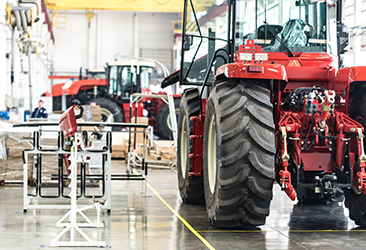
In the workshop, an empty bay immediately stalls throughput. Routine servicing gets pushed back, field service response times stretch out, and critical repair jobs take longer to turn around. When fleet trucks are sidelined or broadacre equipment breaks down in the middle of harvest, clients cannot afford to wait weeks for support. If your branch cannot take the work, that customer inevitably turns to a competing dealer down the road.
The impact is just as real across other departments:
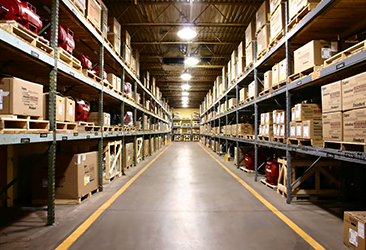
- At the parts counter: An understaffed team drops incoming calls during morning dispatch rushes, inwards freight sits in boxes instead of being binned quickly, and technicians waste time waiting for components to be pulled.
- In machinery sales: A vacant territory means local customer relationships drift, leads go cold, and stock sits in the yard accruing holding costs while competing sales reps get in front of the buyers.
- Across the existing crew: Pushing extra work onto your remaining staff forces heavy overtime, leading to fatigue, costly workshop comebacks, and burnout among your most dependable senior people.
By the time you find that elusive perfect match months down the track, the ground you have lost with customers and your existing team far outweighs any perceived savings.

Why the plug-and-play myth persists
Dealership managers rarely hold out for unicorns out of stubbornness. More often, it comes from a practical worry: the fear of training downtime.
With service managers already juggling bay allocations, customer escalations, and warranty paperwork, the idea of coaching someone through unfamiliar software or a different machine badge can feel daunting. It is easy to think, “If I just hold on for a few more weeks, someone with five years on our exact product will apply”.
However, experienced tradespeople and parts specialists with strong brand backgrounds are almost always already employed, well looked after, and not actively scanning job boards. Demanding an exact match on your job description immediately screens out high-calibre professionals who could easily thrive in your business with a little support.
Shifting from badge loyalty to core aptitude
The most resilient dealerships across Australia approach recruitment differently. Rather than hunting for identical brand experience, they focus on foundational ability, practical problem solving, and the right attitude.
Modern commercial equipment shares the same universal building blocks. High-pressure common rail diesel, closed-loop electro-hydraulics, and CAN-bus electronic networks operate on the same basic principles whether you are looking at a highway prime mover, a broadacre harvester, or a civil excavator. A technician with sound diagnostic logic and good schematic literacy can pick up the nuances of your specific OEM platform in a matter of weeks.
The same applies to parts interpreters and sales consultants. A parts specialist who knows how to navigate dynamic electronic catalogues, handle superseded part numbers, and manage stock flow will adapt to your inventory system quickly. A commercial salesperson with solid relationship-building habits and commercial discipline will learn your machinery specs faster than you think.
A smarter approach to filling vacancies
To keep work moving through your branch, consider recalibrating how you assess incoming applicants:
- Separate must-haves from trainable skills: A commitment to safety, reliable diagnostic habits, and strong team communication cannot be taught overnight. Operating a specific diagnostic laptop interface or learning your dealership management system can.
- Look across adjacent sectors: Don’t hesitate to look at skilled candidates coming from civil earthmoving, commercial transport, or agricultural equipment backgrounds. Their core trade skills are directly transferable.
- Set up a straightforward onboarding plan: You don’t need an exhaustive corporate training academy to get someone up to speed. Pairing a new recruit with an experienced mentor for their first couple of months and booking them into factory online modules creates confidence and ramps up their productivity quickly.
Backing capability over credentials
At the end of the day, your dealership’s reputation rests on customer uptime, repair quality, and reliable product support. An empty bay or unmanned counter helps no one. By shifting your focus away from the mythical unicorn and backing capable people with great trade fundamentals, you protect your current staff, keep customer equipment rolling, and build a stronger, more adaptable dealership team for the long haul.
Teamrecruit is Australia’s most established recruitment agency specialising in truck, earthmoving and agricultural machinery dealerships in Australia, New Zealand, the South Pacific and Southeast Asia. Find out more about Teamrecruit and how we support employers and candidates in the dealership industry.